Leadership and Change Management in Development Contexts
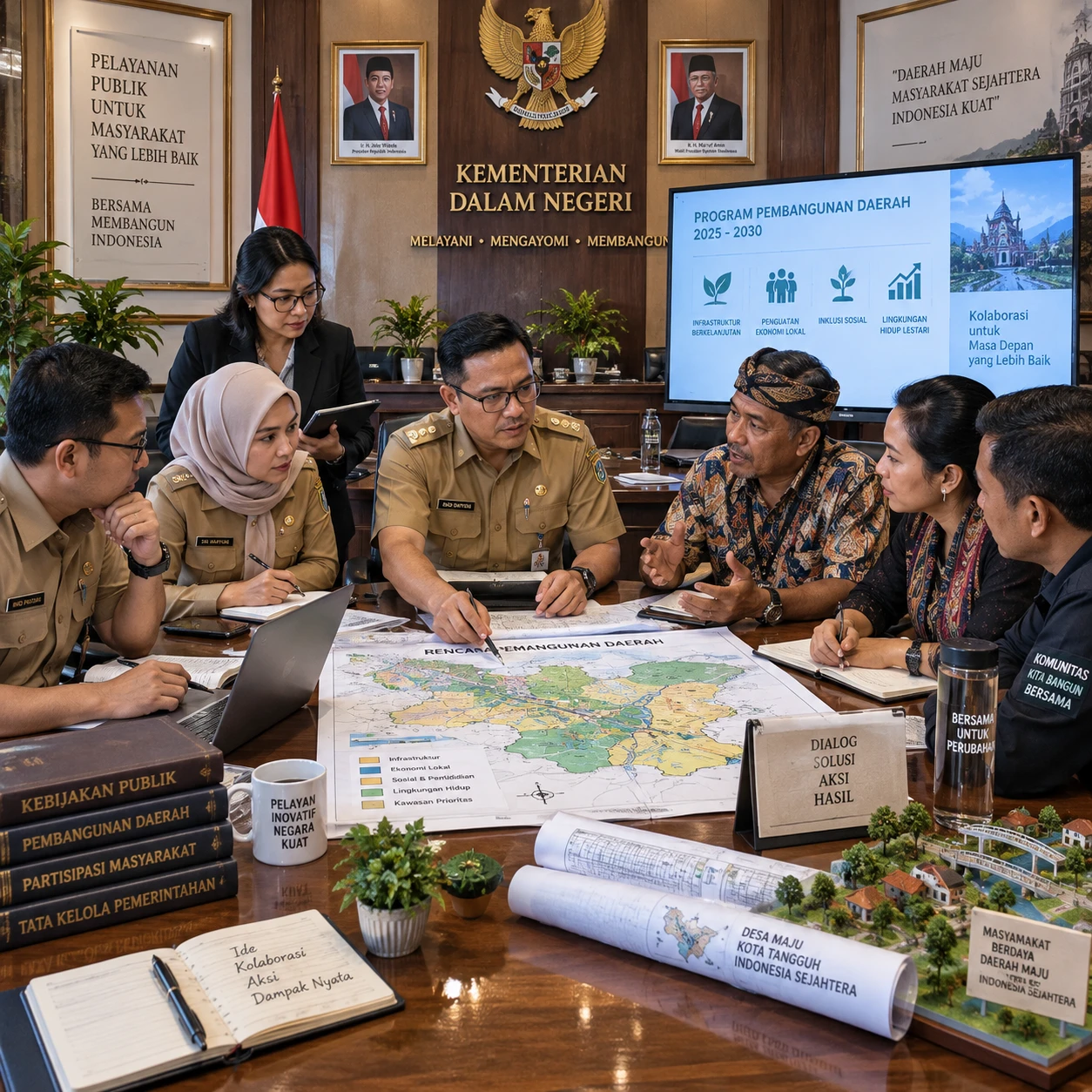
Change in a public institution rarely stays within its organizational chart. A new service model, development program, or accountability process can affect staff, communities, elected officials, and partner agencies at once. Leadership and change management in development contexts therefore require more than a launch plan: they require a practical way to build trust, strengthen institutional capacity, and adapt as conditions shift.
Leaders work within real constraints, including political transitions, limited budgets, formal procedures, and uneven local capacity. A sound approach recognizes those conditions rather than treating change as a generic business transformation. The aim is to make improvements useful to the people they serve and durable enough to continue beyond a pilot or funding cycle.
Why change management matters in public-sector development
Change management helps public institutions turn development goals into lasting changes in services, systems, and staff practice. Without deliberate leadership and follow-through, a promising program may produce short-term activity without improving institutional performance or outcomes for communities.
Development programs often ask institutions to work differently: coordinate across departments, use evidence in planning, reach underserved groups, or report results more transparently. Each shift affects routines, responsibilities, and relationships. Change management connects the intended outcome to the day-to-day work required to achieve it.
For example, a ministry introducing digital case management needs more than software. It needs clear data responsibilities, staff training, support for users, safeguards for sensitive information, and a plan for areas with unreliable connectivity. If those pieces are missing, adoption may remain patchy even when the technology works.
Strong public-sector leadership makes the link between institutional change and public value explicit. It also establishes governance and accountability: who makes decisions, who is responsible for delivery, and how affected communities can raise concerns. The trade-off is that meaningful participation and capacity building take time. Skipping them may speed initial rollout, but can leave an institution unable to maintain the change.
The leadership demands of complex development contexts
Leadership in complex development contexts means adjusting how decisions are made to fit political realities, institutional capacity, and community needs. No single leadership style works in every setting; effective leaders combine direction with listening and adapt their approach as risks and evidence change.
Public institutions operate amid overlapping mandates and formal rules. A development program may depend on several ministries, local government, donors, service providers, and community organizations, each with different incentives and timelines. Political transitions can change priorities, while staff turnover can weaken continuity. Leaders need to map these influences before setting a pace or promising results.
A useful practice is to assess change across three connected dimensions:
- Political and governance conditions: Who has authority, whose support is needed, and what accountability rules apply?
- Organizational readiness: Do teams have the staffing, skills, budget, and systems to carry out the change?
- Community impact: Who benefits, who may face added burdens, and how will local knowledge shape implementation?
This assessment helps leaders distinguish a technical problem from a legitimacy or capacity problem. A delayed service, for instance, may reflect unclear approvals rather than poor staff performance. The response should address the cause, not simply add pressure. Leaders also need to be honest about what they can control: they can improve coordination and transparency, but they cannot remove every political or resource constraint.
Building a shared vision and engaging stakeholders
Leaders build a shared vision by explaining the public problem, the proposed change, and how people can influence its design and delivery. Stakeholder engagement is most useful when it creates a real route from feedback to decisions, rather than serving as a one-time announcement.
Start with a clear account of the change in plain language. Explain what will change, what will remain the same, who may be affected, and what evidence will show progress. Then identify stakeholders by their roles and exposure: civil servants who will use a new process, managers who control resources, community groups who rely on services, and partner agencies whose cooperation is essential.
Choose engagement methods that fit the setting. Staff workshops can reveal workflow problems; community meetings may surface access barriers; interviews can help reach groups who are less likely to speak in a public forum. Share what was heard and what action followed. When leaders cannot adopt a suggestion, they should explain why and identify any other way to address the concern.
A shared vision does not require everyone to agree on every detail. It requires enough common understanding to coordinate action and a fair process for resolving differences. Participation builds legitimacy, but it cannot replace clear authority. Name who decides, who advises, and how disagreements are escalated. This clarity prevents consultation from creating expectations that leaders have no mandate or resources to meet.
Managing resistance and strengthening capacity
Leaders address change resistance by finding out what is driving it, involving affected teams, and providing the skills and support needed to work in new ways. Resistance can signal uncertainty, workload pressure, loss of discretion, or a genuine flaw in the proposed change.
Begin with listening rather than labeling people as unwilling. A frontline team may question a reporting requirement because it duplicates existing forms or takes time away from service delivery. Those concerns are operational evidence. Leaders can test whether the requirement can be simplified while preserving the information needed for governance and accountability.
Useful support combines communication, participation, and practical capacity building:
- Explain the reason for change and acknowledge what remains uncertain.
- Involve staff in testing procedures and identifying implementation risks.
- Provide role-specific training, coaching, and access to help after launch.
- Adjust workloads and responsibilities where the new process adds significant tasks.
- Recognize progress and make it safe to report problems early.
Training alone rarely solves a system-level barrier. Staff may understand a new process yet lack authority, equipment, or time to use it. Leaders should connect individual learning to institutional capacity: adequate budgets, clear procedures, supportive supervision, and coordination between units. Capacity building is ongoing, though it has costs. If resources are limited, prioritize the roles and locations most critical to safe, reliable delivery.
Implementing and adapting change
To implement change, define the intended outcomes, assign accountable owners, test the approach where feasible, and use evidence to adjust before expanding. A phased plan helps public institutions manage risk without assuming that every site or team is ready at the same time.
Translate the vision into a sequence of decisions and actions. For each phase, specify the responsible unit, required approvals, staffing and budget needs, dependencies, and measures of progress. A small pilot can reveal practical issues, but it should represent real operating conditions; a well-resourced pilot site may not reflect the constraints of rural or under-served areas.
Set decision points in advance. For example, a program team might review adoption, service quality, user feedback, and data completeness after an initial rollout period. If results fall short, determine whether the cause is training, system design, local infrastructure, or unclear accountability before choosing a response. Adaptation should be documented so teams know what changed and why.
Clear responsibilities matter especially when several agencies share delivery. Use regular coordination meetings to resolve dependencies, record decisions, and escalate issues that cannot be settled at working level. Adaptation is disciplined course correction, not a reason to change targets whenever performance is difficult. Preserve the intended public outcome while revising methods that do not fit local realities.
Sustaining change through accountability and learning
Public institutions sustain change by embedding it in routine responsibilities, budgets, procedures, and staff development, then using monitoring and evaluation to learn whether it works. A temporary project team or external partner may help establish a reform, but institutional ownership is needed to maintain it.
Monitoring should track more than activities completed. Pair implementation measures, such as staff trained or offices using a process, with service and outcome measures that reflect whether people benefit. Disaggregate data where appropriate so averages do not conceal gaps between regions or groups. Combine administrative data with staff and community feedback, since numbers alone may not explain why access or performance has changed.
Use findings in a regular review cycle: identify what is working, investigate gaps, agree on corrective actions, and assign an owner and deadline. Share results with oversight bodies and affected communities in a form they can understand. This strengthens governance and accountability while giving leaders early warning when a policy is not delivering as intended.
Finally, connect the change to ordinary institutional systems. Update job descriptions, operating procedures, budget plans, induction, and performance reviews where needed. Development partners can support this work, but parallel structures may weaken ownership if they continue indefinitely. Sustainability depends on routine practice, credible resources, and leadership succession, not on a project’s final report alone.
Frequently asked questions
What is change management in a development context?
Change management in a development context is the planned, adaptive work of helping public institutions and the people they serve move from current practices to improved services, systems, or outcomes. It includes stakeholder engagement, capacity building, implementation, and monitoring.
What role do public-sector leaders play in organizational change?
Public-sector leaders set direction, clarify authority, secure resources, coordinate stakeholders, and create conditions for staff to implement change. They also remain accountable for explaining decisions and responding to evidence about the effects of a reform.
How can leaders address resistance to change?
Leaders can address resistance by listening to concerns, distinguishing practical barriers from uncertainty, involving affected people in solutions, and providing relevant training and support. They should also revise a change when feedback reveals a real design or access problem.
How can development organizations sustain change over time?
Development organizations can sustain change by building it into budgets, procedures, roles, and staff development, then reviewing results through monitoring and evaluation. Continuity improves when local institutions own decisions and have the capacity and resources to maintain them.